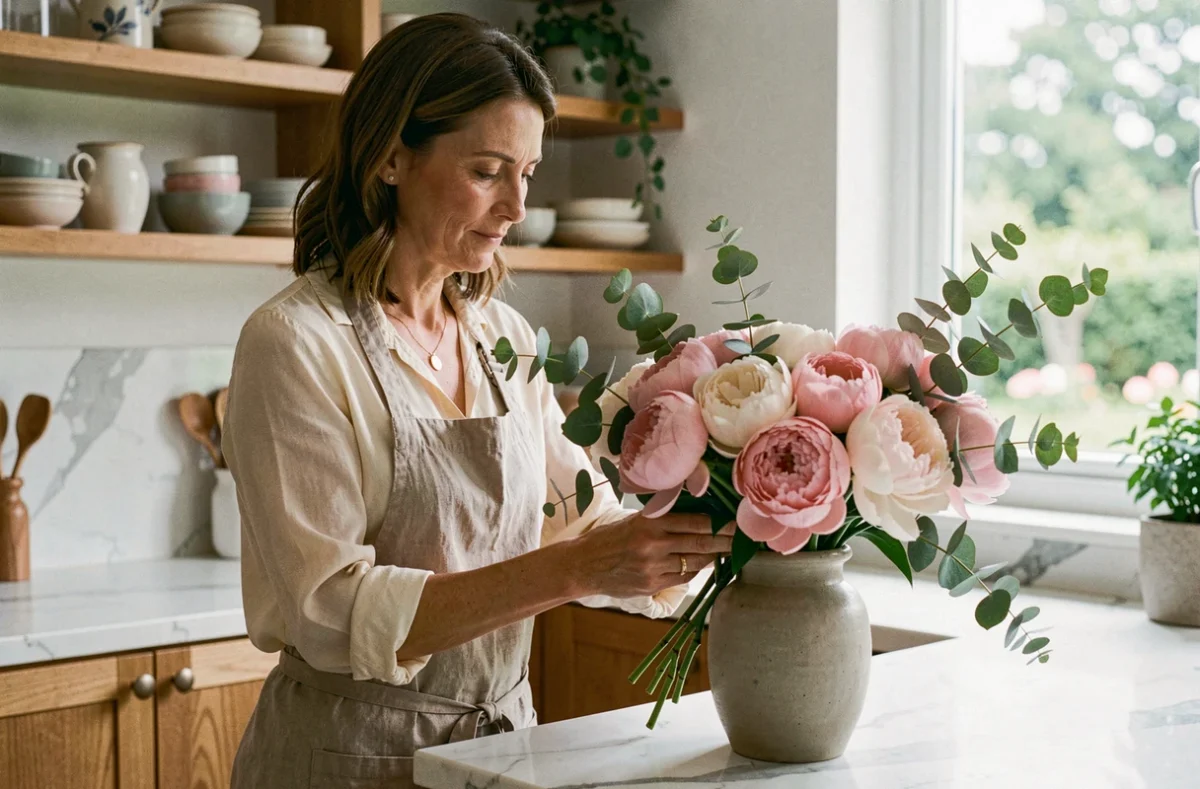
Each room in a home has its own light, humidity and temperature conditions, which directly affect how long flowers last, whether cut or potted. Choosing flowers for your home means matching these factors to the look you want, rather than following a generic list of “pretty plants”.
Light and humidity: the two factors that determine which flowers to choose for your home
Before thinking about color or style, the first thing to check is how much natural light the room gets. A south-facing window offers very different conditions from a hallway with no windows. Light has a greater impact on flowering than watering or the type of potting soil.
Ambient humidity is the second factor. After a hot shower, a bathroom can reach very high humidity levels. This suits some tropical plants, but can quickly cause a bouquet of roses on the edge of the bathtub to rot.
Combining these two factors gives you a reliable guide for choosing flowers room by room, without relying solely on the look of the pot or the color of the petals. To explore varieties suited to different settings, the flowers from Une Fleur Un Jardin let you compare the needs of each species.
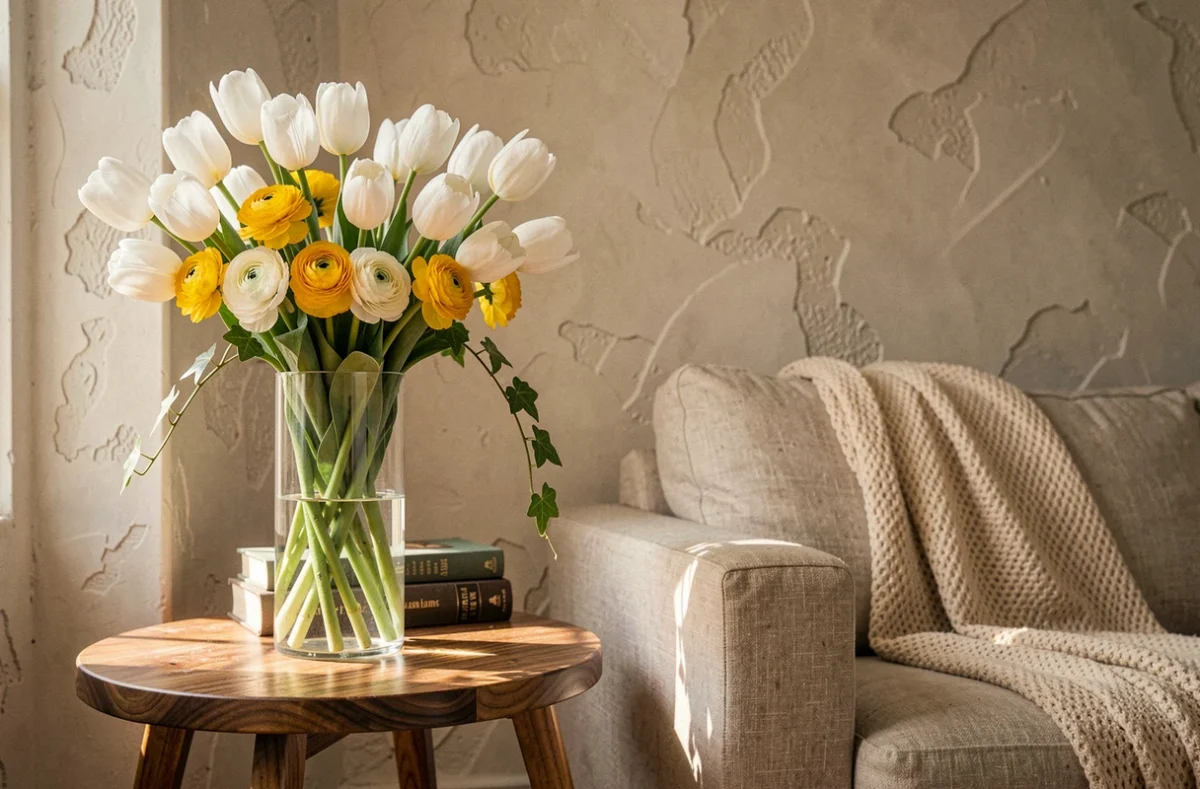
Flowers for the living room: focus on longevity and colors that stand out
The living room is usually the brightest room in the home and the one where people spend the most time. It is also the space most exposed to drafts (from the front door or an open window), which speeds up dehydration in cut flowers.
Fresh bouquets: consider placement before style
A bouquet placed in direct sunlight on a coffee table will lose its petals within a few days. Keep the vase away from direct heat sources (radiators, south-facing glass doors) to significantly extend the flowers’ lifespan. Keeping an eye on the water level in the vase is the most effective way to preserve them—far more so than the “flower food” sachets provided by florists.
Flowers with sturdy stems (lilies, sunflowers, alstroemerias) last better in a busy living room than varieties with soft stems, such as tulips, which quickly bend in the warmth of the room.
Flowering potted plants: orchids and kalanchoe are top picks
The Phalaenopsis orchid adapts well to the living room, thanks to its tolerance for indirect light and blooms that last for several weeks. The nearly indestructible kalanchoe offers a range of bright colors and needs very little watering.
Flowers for the kitchen: heat resistance and toxicity
The kitchen experiences temperature fluctuations (oven, stovetop) and spikes in humidity (cooking steam). Flowering kitchen plants need to tolerate these temperature changes without losing their blooms.
The Spathiphyllum (peace lily) tolerates occasional heat well and filters some indoor air pollutants, making it a good choice near a countertop. Cyclamen, as long as it is kept away from the stovetop, prefers cool rooms and flowers for a long time if watered from below.
One often-overlooked point is the proximity of food to certain toxic plants. If children or pets spend time in the kitchen, checking each plant’s toxicity before bringing it in is a habit worth adopting.
Bathrooms and dark rooms: flowers that tolerate low light
Bathrooms without windows or with opaque windows are the most challenging case. Very few flowering plants survive for long without natural light.
- Spathiphyllum, once again, tolerates low-light environments and thrives in the humidity of a bathroom. Its white blooms brighten the space naturally.
- African violets (Saintpaulia) flower almost continuously if they receive a little indirect light, for example near a mirror that reflects light from an adjoining hallway.
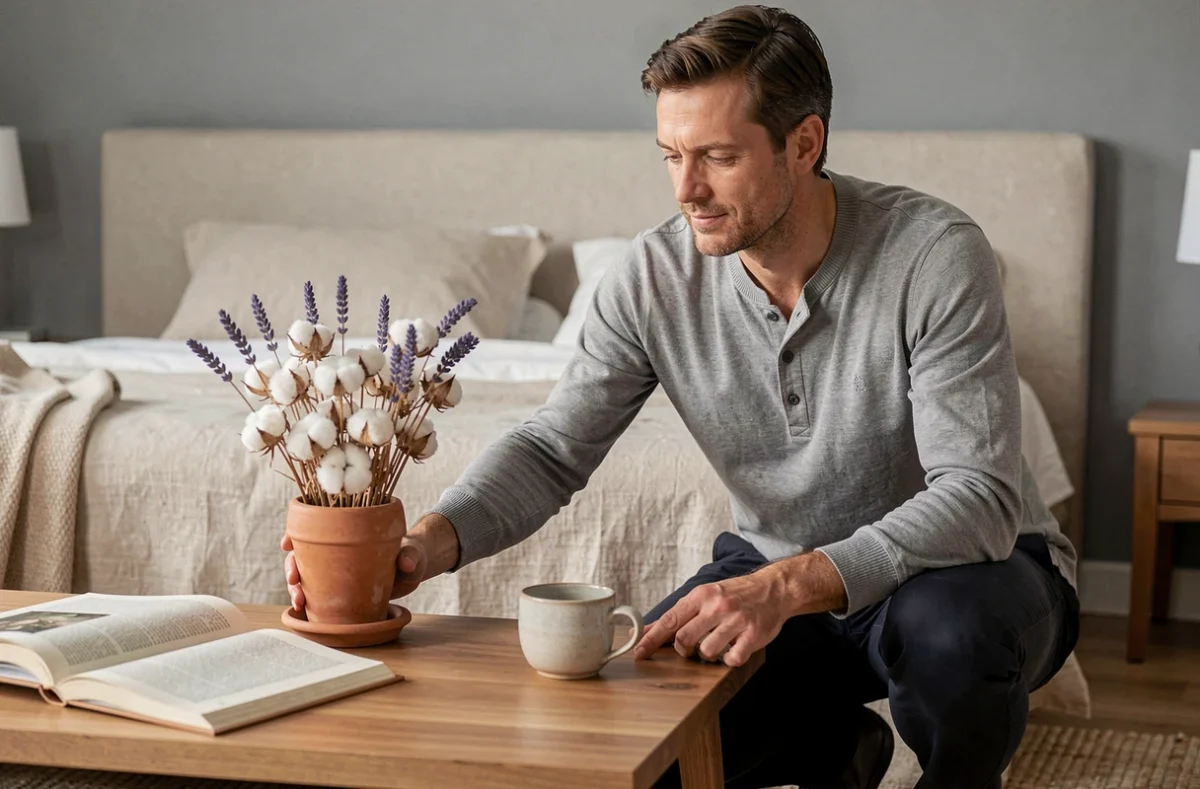
- For truly dark rooms (hallways, windowless entryways), a bouquet of dried or preserved flowers is the only realistic option. No flowering plant can survive for long without any light at all.
Dried flowers aren’t a fallback choice: when arranged well, they create a lasting decorative display for several months, with no maintenance required.
Flowers and pets: the danger of lilies for cats
This is about more than just decoration. Lilies are toxic to cats, including the water in the vase. Eating any part of the plant or simply coming into contact with the pollen can cause severe poisoning. According to veterinary advice reported by Radio France, contact a veterinarian promptly if exposure is suspected—don’t wait for symptoms to appear.
The warning isn’t limited to lilies. Dieffenbachia, lily of the valley and azalea are among the common plants that can be harmful if pets ingest them. Checking that a flowering plant is safe for the animals in your home before buying it can help prevent veterinary emergencies.
- Lilies, lily of the valley, azalea: avoid in homes with cats or dogs
- Phalaenopsis orchid: considered non-toxic to pets
- Spathiphyllum: mildly irritating if ingested; place it out of reach if your pet is curious
- African violet: no known danger to cats or dogs
Floral decor and room style: coordinate colors without overdoing it
A common mistake is to mix too many varieties and colors in the same space. A monochrome or two-tone bouquet is easier to work into existing decor than a mix of five colors.
White flowers work with every interior style, from Scandinavian to rustic. Warm shades (orange, yellow) suit north-facing rooms, where they visually make up for the lack of natural light. Cool colors (lavender blue, purple) work better in interiors that are already bright.
A single stem in a bud vase can have just as much visual impact as a large bouquet. The number of flowers doesn’t directly determine the decorative effect; it’s the contrast with the immediate surroundings that draws the eye.
One final point to keep in mind is where the flowers come from. Asking your florist about the origin of the varieties on offer and choosing locally grown flowers when possible is a sensible approach, both for the bouquet’s longevity (less transportation, fresher flowers) and for its environmental impact.