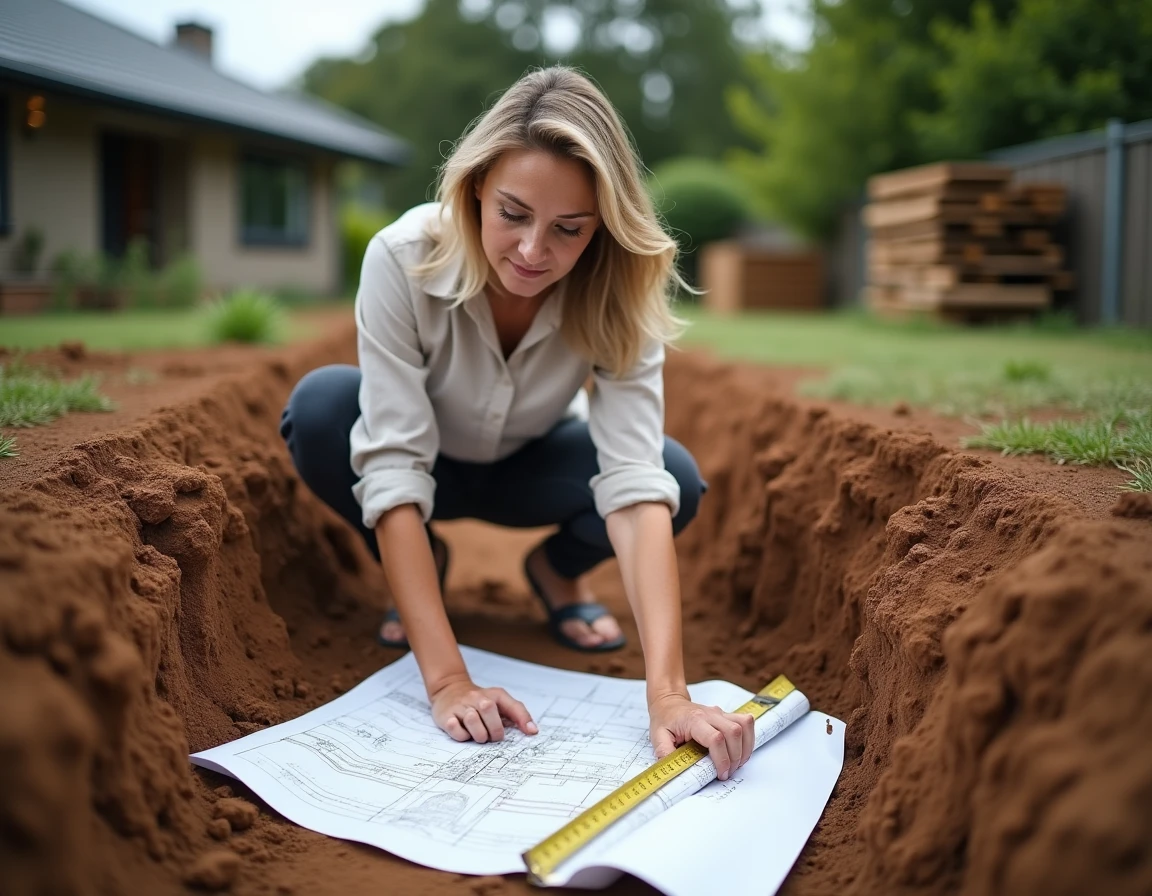
An underground terrace is sized based on geotechnical and hydraulic constraints, not from a furniture catalog. The excavation depth, soil type, and stormwater management set the envelope before even discussing usage. Neglecting these parameters is akin to designing a basin that accumulates water against the foundations.
Earth pressure and retaining wall: the true starting point for sizing
Every underground terrace generates a difference in height between the finished level of the slab and the adjacent natural ground. This difference creates a lateral earth pressure on the vertical walls of the box. The deeper the embedding, the more the section and reinforcement of the retaining wall must follow.
We recommend involving a design office as soon as the height difference exceeds a few dozen centimeters. Since 2023, several home insurers actually require a structural engineer’s report when an underground terrace alters the ground level against a facade wall. Without this report, the ten-year warranty can be contested in the event of damage related to infiltrations or wall tipping.
The nature of the soil directly conditions the thickness of the foundation slab and the type of foundation for the peripheral walls. A swelling clay soil requires deeper footings and enhanced drainage compared to a draining sandy soil. Before choosing the dimensions and depth for an underground terrace, at a minimum, a soil survey or a G2 study is necessary if the project is adjacent to the house.
Excavation depth of an underground terrace: balancing comfort and technical constraints
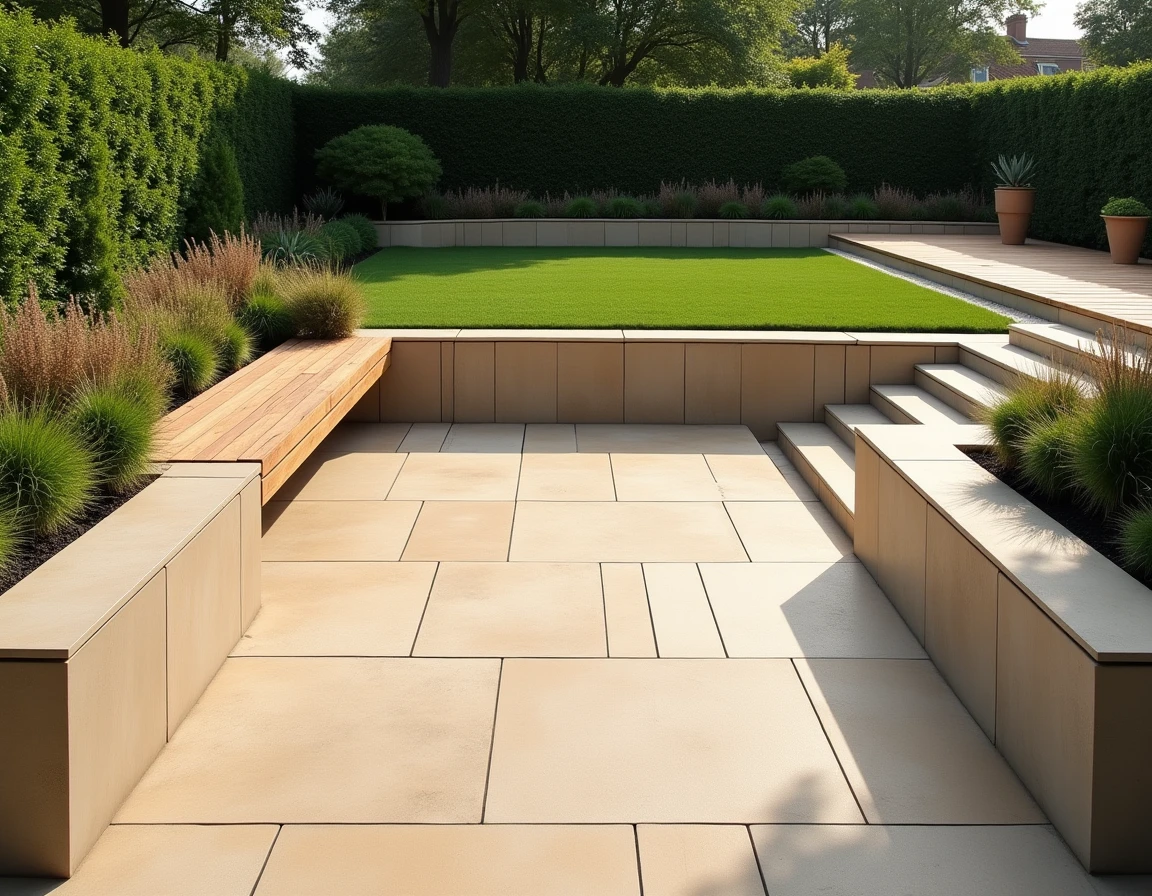
The total excavation depth does not correspond to the visible height of the difference. It adds several layers: the compacted gravel base, the concrete slab, any insulation, and the final covering (wooden planks, composite, paving).
A moderate visual embedding remains the most manageable scenario. Beyond that, water management becomes the critical issue. The bottom of the terrace ends up below the level of the natural ground, preventing any simple gravitational drainage towards the garden.
Water drainage at the low point
The common solution is to install a drainage pit centered under the slab, with a drained concrete pipe and an inspection cover. The excavation bottom must account for the depth of this pipe in addition to the slab thickness. In practice, the total excavation depth can far exceed the apparent height difference.
The slope of the slab towards the collection point must remain perceptible to direct the water without creating residual puddles. We observe that many projects underestimate this aspect, resulting in terraces where water stagnates after each rain.
Guardrails and fall height: a regulatory constraint that limits depth
French regulations impose a guardrail from a fall height of 1 m, with a minimum protection height of 1 m for private use and a maximum spacing of 11 cm between the bars. This rule directly applies to underground terraces where the upper edge of the ground creates a difference compared to the slab.
If the embedding depth approaches or exceeds this threshold, the requirement for guardrails radically alters the project’s aesthetics. Many project owners specifically want an underground terrace to achieve a flush effect, without a visual barrier. Therefore, it is necessary to calibrate the depth to remain below the regulatory threshold or accept the installation of a guardrail.
In practice, staying below this threshold while maintaining a comfortable seating height on the peripheral walls constitutes the best compromise. Beyond that, the project shifts into a heavier technical and regulatory category.
Usable surface area and footprint: the ratios that matter
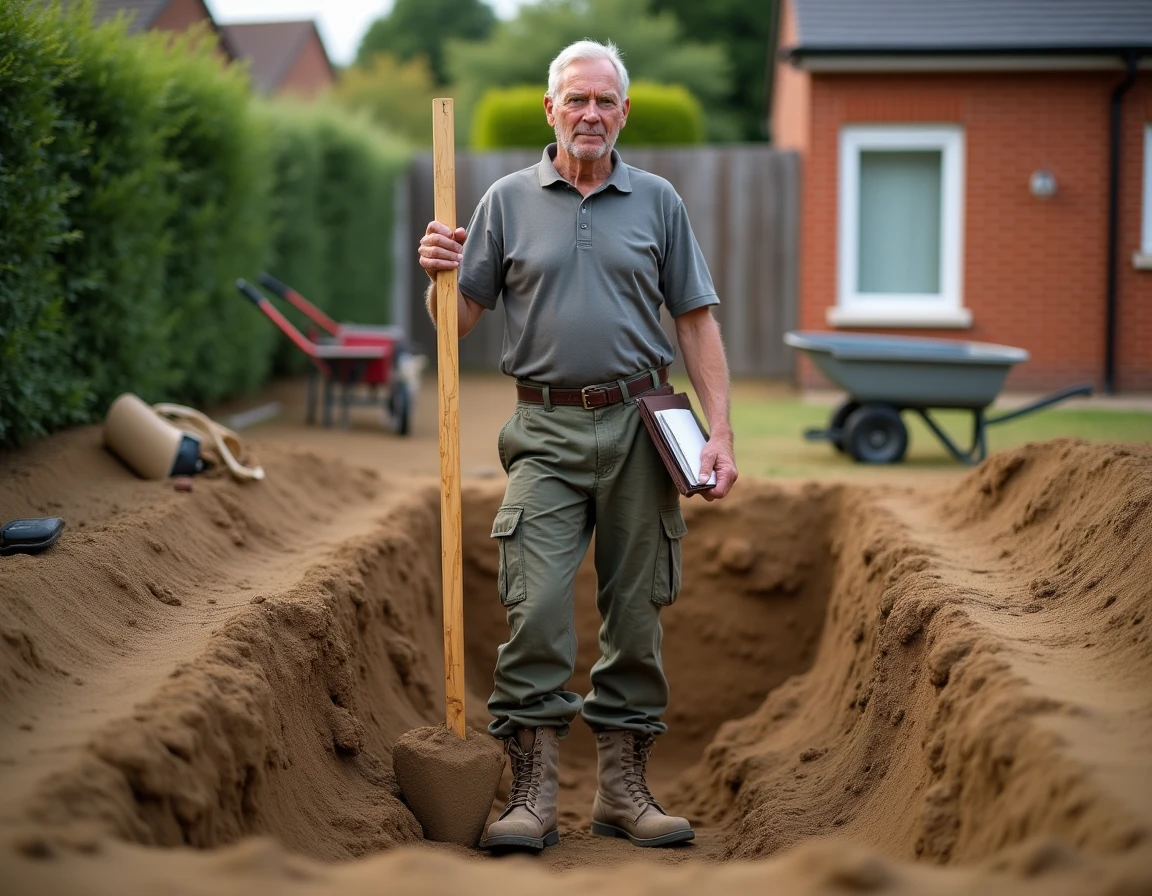
The plan dimensions (length, width) depend on the intended use, but also on the actual footprint of the site. The layout of an underground terrace must be wider than the finished dimensions to allow for wall formwork and work at the bottom of the excavation. Planning an additional twenty centimeters on each side is a common minimum.
Three technical criteria guide the choice of usable surface area:
- The distance between the terrace and the house foundations: too close, the excavation destabilizes the existing footings. A design office determines this distance based on the depth of the foundations and the nature of the soil.
- The capacity of the ground to absorb collected water: an undersized drainage pit on poorly permeable soil causes water to rise under the slab. The terrace surface must remain consistent with the soil’s infiltration rate.
- The potential future integration of a mini-pool: the trend for pools of less than 10 m² integrated into an underground terrace requires anticipating technical access, circulation areas, and safety distances from the design phase.
Minimum usable width
Below 3 m of interior width, the space becomes too constrained to accommodate a dining area and proper circulation. A width of 3.50 m to 4 m offers real versatility without excessively complicating the retaining structure.
The length can be adapted more freely, but each additional linear meter extends the retaining wall and increases the volume of earth to be removed. On a sloped site, prioritizing the dimension along the slope reduces the average height of the walls and thus the structural cost.
Choice of covering and impact on total thickness
The final covering (wooden planks, composite, paving on pedestals) adds a thickness that modifies the excavation level. Wooden planks on joists represent a more significant additional thickness than a glued paving. This delta must be integrated from the start of the excavation so that the finished level of the terrace corresponds to the planned level.
Composite planks offer superior dimensional stability compared to natural wood in an underground environment where residual moisture remains high. Exotic wood performs well but requires ventilation under the planks, which the basin configuration makes more difficult to ensure.
The sizing of an underground terrace primarily takes place below the visible surface. Excavation depth, earth pressure, water drainage, and the regulatory guardrail threshold form a system of interdependent constraints. Addressing these points upstream with a design office remains the only reliable approach to achieving a stable and compliant structure.