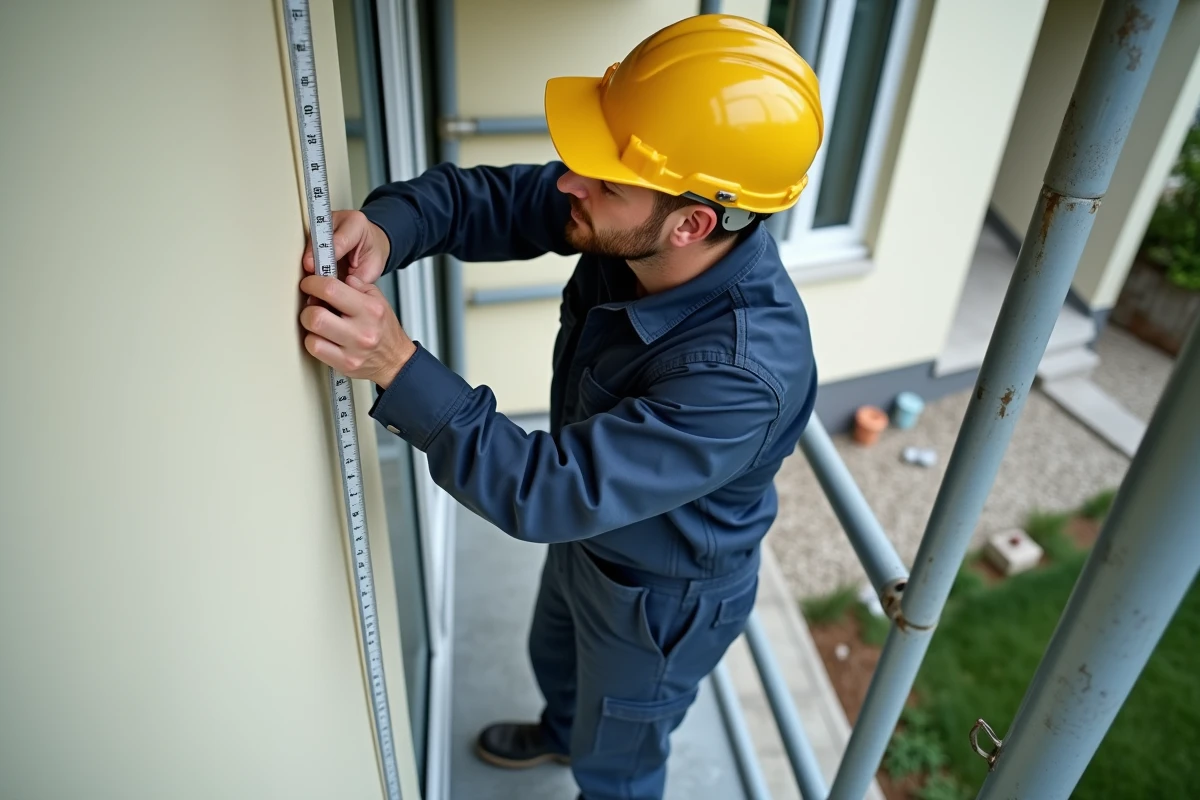
Repainting a gable six meters off the ground and refreshing a bathroom ceiling do not require the same scaffolding. The working height determines the type of structure, its footprint, and the assembly precautions. Choosing a model that is too short forces you to stack makeshift extensions, while choosing one that is too tall results in paying extra rental costs and handling unnecessary elements.
Working height and floor height: the distinction that changes everything
The two values displayed on product sheets are often confused. The floor height refers to the level of the platform you stand on. The working height adds the reach of your arms, which is about one meter eighty above the floor. Therefore, a scaffolding with a floor height of three meters offers a working height close to five meters.
This distinction has a direct impact on the choice of model in stores. A seller who states “height five meters” is almost always referring to the working height. If you need to reach the underside of a gutter located five meters up, a floor height of three meters is sufficient. Systematically checking which measurement is on the label helps avoid renting an oversized frame.
This logic also applies to configurations with an internal staircase: when standing on the last landing, your head is lower than it would be on a full platform. Feedback on this point varies by brand, but you generally lose about ten centimeters of usable reach compared to a standard floor.
To compare the models available for scaffolding rental at Leroy Merlin, starting from the floor height remains the most reliable method, as it does not depend on the user’s size.
Facade scaffolding: adapting the height to the type of wall
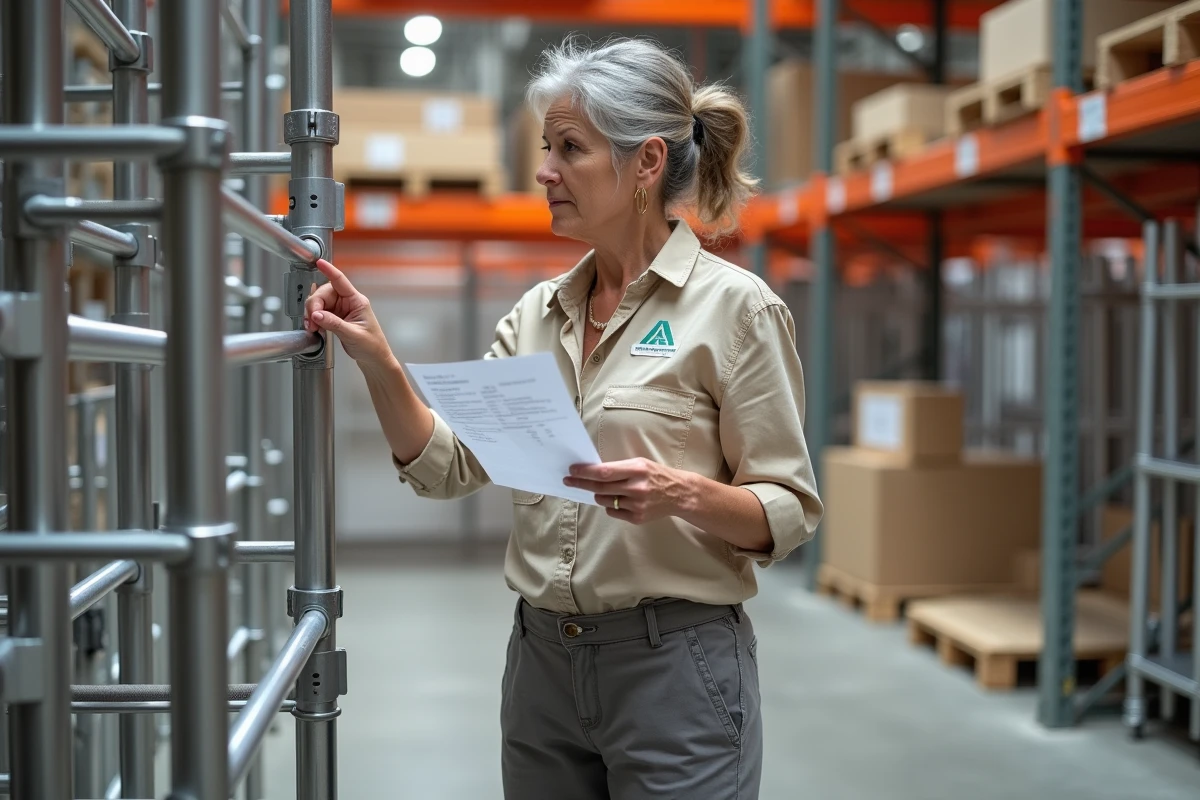
On a single-story house, most interventions (plastering, painting, gutter cleaning) occur between two and five meters of working height. This is precisely the range where the Health Insurance, in its 2023 construction accident report, notes a disproportionate number of falls among non-professionals using rental equipment. The risk rarely comes from the height itself: it comes from a platform that is too narrow or poorly stabilized.
An aluminum rolling scaffold with a platform height of around two meters covers most of these cases. For a gable of a two-story house, you should aim for a platform between four and six meters, which means a structure with multiple stacked frames.
Accessible facade or sloped terrain
On flat and stabilized ground, wheels with brakes are sufficient. On sloped terrain, adjustable jacks are necessary, not makeshift wedges. Many models offered for rent include adjustable feet, but you must check their maximum travel before signing the withdrawal slip.
A wall with projections (projecting window sills, roller shutter boxes) also requires planning for a gap between the scaffolding and the facade. The larger this gap, the greater the risk of tipping if the base is not wide enough.
Interior work: when ceiling height dictates the model
For a standard ceiling height of around two meters fifty, a simple step ladder or a single platform is sufficient. Scaffolding becomes relevant once the ceiling height exceeds three meters (stairwell, mezzanine, double-height entrance hall).
Indoor scaffolding is narrower than facade models. Their reduced footprint facilitates passage through hallways, but it limits the allowable load and lateral stability. You do not set up a second level on a frame designed for one.
Stairwell: the most technical case
Working in a stairwell requires scaffolding with independently adjustable legs. The steps create a height difference that wheels cannot compensate for. Some specific kits, sometimes called “stair scaffolding,” offer asymmetrical frames with one short leg and one long leg.
This type of configuration represents the scenario where renting is most beneficial: buying a stair kit for a single job is expensive, and storing it in a garage takes up space for rare use.
Standard NF EN 1004-1 and consequences for available rental models
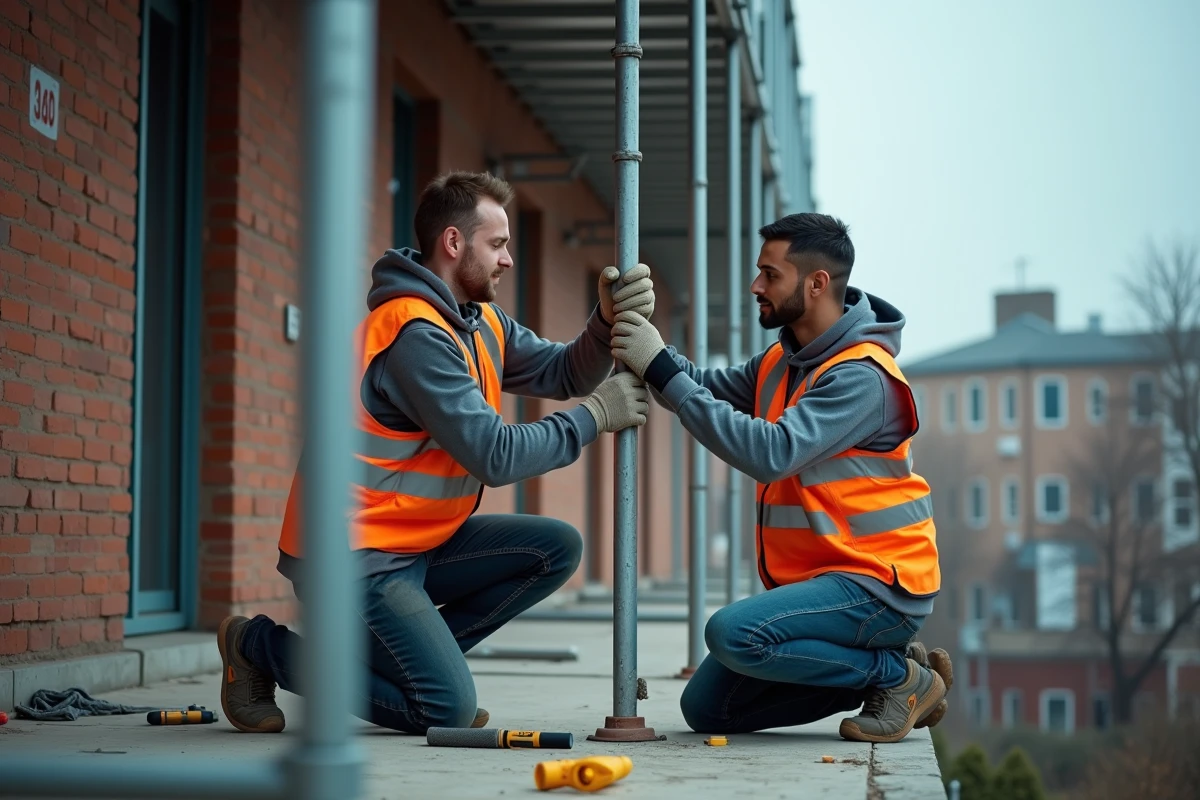
Since the update of the NF EN 1004-1 standard published by AFNOR in 2021, lightweight rolling scaffolds must allow for safe assembly from the lower level. The old principle of relying on guardrails to climb to the next level is no longer compliant.
This evolution has a concrete consequence: some older kits reaching seven to eight meters in height are no longer marketed or have been reconfigured. Narrow models intended for individuals are the most affected because their reduced width made “internal” assembly more complex to standardize.
In stores, this translates to an offer focused on floor heights of up to five or six meters for narrow structures. Beyond that, the models offered are wider and heavier, complicating transport for individuals.
Checklist before confirming the rental of a scaffolding
Before reserving a model, a few quick checks can help avoid an unnecessary trip back to the store:
- Measure the exact height of the highest point to be reached, then subtract the reach of your arms to get the necessary floor height.
- Check the available width on the ground (gate passage, hallway, slope) and ensure that the frame’s footprint fits with at least twenty centimeters of margin on each side.
- Ensure that the kit includes stabilizers or jacks suitable for the terrain, and that the guardrails are complete (top and middle rails, toe board).
- Ask if the model complies with the recent NF EN 1004-1 standard, especially for structures exceeding four meters in floor height.
A properly sized scaffolding sets up faster, moves more easily, and reduces the risk of accidents. Starting from the actual height of the site, not from an approximate estimate, remains the only method to avoid ending up with unsuitable equipment on the day.