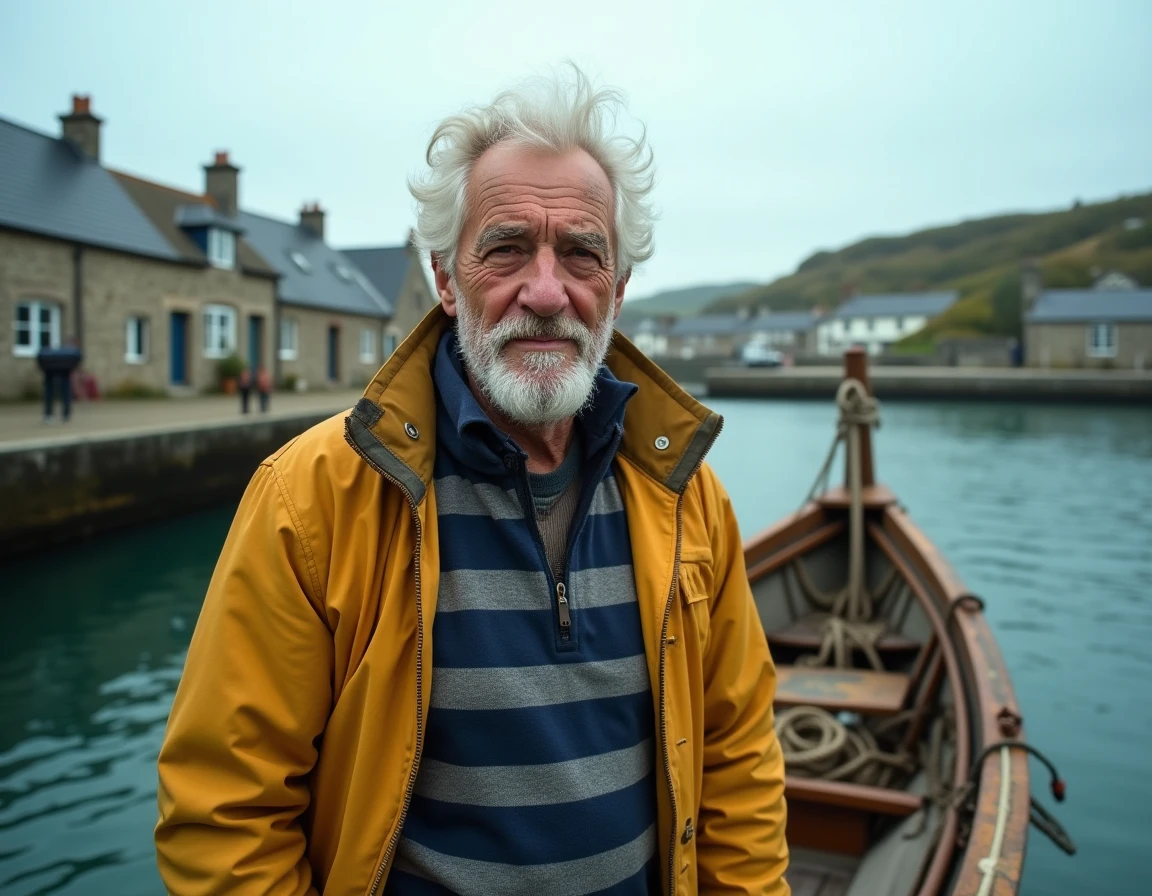
Brittany is not just about its coasts or its crêpes. The region has a political, linguistic, and cultural trajectory that distinguishes it from any other French territorial entity. Understanding this uniqueness requires looking beyond folklore and delving into the concrete mechanisms that structure its identity.
Breton Language Policy: A Multi-layered Framework
Breton and Gallo coexist in the territory, but their institutional treatment differs radically. Breton benefits from a network of Diwan schools (immersive education), public and Catholic bilingual programs, and standardized road signage. Gallo, a Romance language of Upper Brittany, remains largely absent from formal educational provisions.
The DRAC Brittany, a decentralized service of the Ministry of Culture, intervenes in the funding and support of projects related to regional languages. Its role complements that of the Region, which oversees the specific agreement for Breton. We observe that this dual oversight (State and local authority) sometimes creates redundancies, but it ensures a budgetary continuity that other regional languages lack.
The available data on portailbreton.net allows for tracking the evolution of these policies and their concrete effects in the associative and educational fields.
Digital Transmission and the Role of Kenleur
The cultural confederation Kenleur, with the support of the bagpiper association Sonerion, has launched a digital tool dedicated to promoting Breton dances, music, and costumes. This shift towards online transmission platforms marks a break from the exclusively oral and in-person model of Celtic circles.
The tool does not replace the fest-noz or collective practice. It archives, standardizes, and makes accessible an intangible heritage that was fading away due to a lack of sustainable supports.

Historical Brittany and Administrative Brittany: A Division that Structures Debates
Historical Brittany comprises five departments: Côtes-d’Armor, Finistère, Ille-et-Vilaine, Morbihan, and Loire-Atlantique. The administrative region retains only four, excluding Loire-Atlantique since the 1941 reform, confirmed by successive divisions.
The question of the attachment of Loire-Atlantique remains an active political issue. Citizen consultations, parliamentary proposals, and associative mobilizations regularly revive the debate. Nantes, the former ducal capital, concentrates the historical and economic arguments of those advocating for reunification.
This divide is not trivial. It conditions the areas of competence of the Brittany Region, its cultural budgets, its tourism policies, and the way the media covers regional news. An article about Rennes or Brest naturally falls under Brittany; a topic on Saint-Nazaire falls into an editorial gray area.
Gouel Breizh: The Festival of Brittany as a Diplomatic Tool
Since the 2010s, the Festival of Brittany (Gouel Breizh) has taken on an internationally coordinated dimension. Programming occurs in several dozen countries where Breton communities organize concerts, festoù-noz, and cultural events under the institutional label “Brittany.”
This is not merely a folkloric export. The Region pilots this internationalization as a lever for territorial influence, akin to an economic promotion campaign. Events abroad help maintain a diasporic link and position Brittany as an identifiable cultural brand.
- Institutional coordination between the Region and Breton associations abroad, with a common calendar and shared graphic charter
- Musical and festive programming that goes beyond the traditional repertoire to include contemporary creations in the Breton language
- Articulation with regional tourism policies, particularly to attract international visitors sensitized by these events

Brittany News: Structural Tensions to Watch
Recent Breton news highlights underlying conflicts that go beyond mere incidents. Water management is a hot topic, with protests in Rennes regarding the ban on pesticides in certain sensitive areas. The conflict pits farmers against water resource defenders within local water commissions.
The healthcare sector is going through a critical phase. Fehap Brittany has raised concerns about the freeze on nursing school placements for the upcoming school year, describing this decision as a “strategic and political nonsense” in light of the growing needs of the territories. The tension between regional budget constraints and healthcare demand illustrates a balancing act that other French regions also face, but which takes on a particular sharpness in Brittany due to the geographical dispersion of the population.
Cultural Life and Festivals in Finistère
The Breton summer calendar remains busy. The Cornouaille festivals (FestiDreuz, Irréductible, God Save the Kouign, Cornouaille, Maritime Festivals) illustrate the diversity of offerings. Ticket sales show variable rhythms depending on the events, with some nearing sell-out while others struggle to fill seats.
This disparity reflects a segmentation of the Breton festival audience between traditional fest-noz enthusiasts, those curious about contemporary music, and families seeking maritime leisure. Successful organizers are those who maintain a clear positioning rather than a catch-all programming approach.
Brittany continuously produces cultural, political, and economic material that exceeds its surface area. Following its news requires understanding the fault lines that run through it, from linguistic issues to health arbitrations, along with a territorial division that has never reached consensus.